
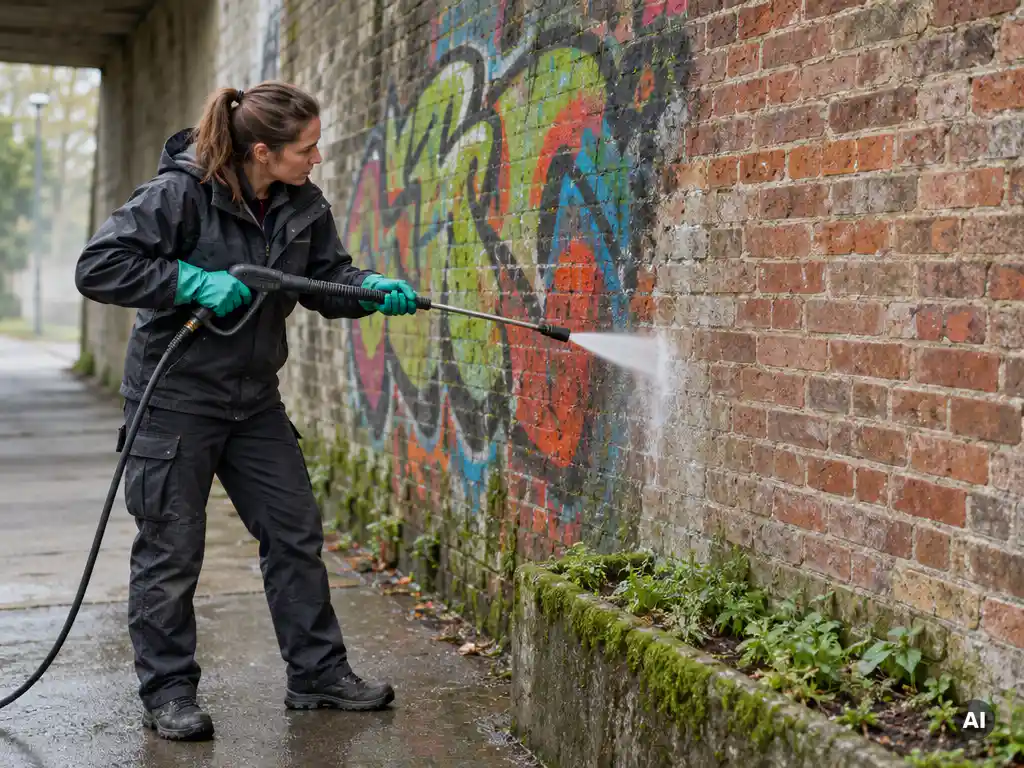
A biodegradable graffiti remover is the better choice because its active ingredients are broken down by micro-organisms in the environment after use, which means less strain on water and soil than with conventional solvents. For professional specialists, this means they can remove graffiti effectively without relying solely on aggressive chemical agents. In this article, we answer the most frequently asked questions about biodegradable graffiti removers.
What makes a graffiti remover biodegradable?
A graffiti remover is biodegradable when its active components are converted by micro-organisms into water and carbon dioxide after application, leaving no persistent residues behind. This sets such formulas apart from conventional solvents based on aromatics or chlorinated compounds, which can remain present in the environment for a long time.
However, biodegradability says nothing about a product’s other properties. A biodegradable graffiti remover is not automatically plant-based, gentler on the skin, or free of hazardous substances. The composition determines whether a product is safe and effective for a specific surface. Always consult the product data sheet and label before applying a product, and leave the work to trained specialists.
Choosing a biodegradable formula is therefore a technical consideration, not an automatic guarantee of broad applicability or safety. For an overview of the available formulations, see the professional graffiti removers in our range.
What damage do conventional graffiti removers cause?
Conventional graffiti removers often contain strong solvents such as ketones, esters, or chlorinated hydrocarbons. These substances are effective against paint layers, but with careless use they can damage the underlying materials, particularly porous surfaces such as certain types of natural stone, concrete, and brickwork. In addition, residues of these agents remain present in wastewater after rinsing.
Besides damage to the surface, conventional agents expose specialists to higher concentrations of volatile organic compounds. This calls for extensive personal protective equipment and good ventilation. In the longer term, repeated use of aggressive solvents can weaken the structure of porous materials, leading to additional maintenance costs.
When it comes to removing graffiti from buildings, it is therefore important to look not only at cleaning power, but also at the compatibility of the product with the specific surface.
How does a biodegradable graffiti remover work on surfaces?
A biodegradable graffiti remover dissolves the paint layer chemically by attacking the binders in the graffiti, after which the paint can be removed mechanically or with water. The active components penetrate the paint layer without attacking the underlying surface, provided the product is suitable for that specific surface.
Gel-based products offer a practical advantage here: the higher viscosity keeps the product in place on vertical and sloping surfaces during the dwell time. This makes gel-based formulations suitable for use on facades, structures, and other non-horizontal surfaces.
It is important to note that surfaces such as granite, other types of natural stone, concrete, brickwork, metal, glass, and ceramics each react differently to chemical cleaning agents. Granite is a type of natural stone, but not every natural stone reacts identically to the same formula. Always leave the selection of the right product and the execution to specialists, and consult the product data sheet for the correct procedure.
Does an eco-friendly graffiti remover meet professional requirements?
A graffiti remover with biodegradable components can fully meet professional requirements, but biodegradability alone is not a measure of cleaning performance. What matters for professional applications is whether the product effectively dissolves all relevant types of graffiti and inks on the surfaces it is intended for, without damaging the material.
For professional specialists in municipalities, maintenance companies, and facility services, the following criteria are relevant when selecting a product:
- Effectiveness on the specific surface and type of graffiti
- Applicability undiluted, without an extra dilution step
- Availability of technical documentation, such as the product data sheet and safety data sheet
- Support from the supplier with application and training
For removing graffiti in public transport, specific requirements also apply regarding compatibility with coatings and paint systems on rolling stock. Always check whether the chosen product is suitable for the application in question.
What legal and environmental benefits does a biodegradable formula offer?
Products with biodegradable active ingredients often fall into a more favorable classification under European regulations for hazardous substances, such as the CLP Regulation. This can affect storage, transport, and the required personal protective equipment. Whether a specific product falls into a lower hazard class is stated on the safety data sheet.
From an operational perspective, a more favorable classification can reduce the administrative burden for companies, for example when drawing up safety registers or applying for permits. This is relevant for municipalities and contractors that work with multiple chemical products and must comply with internal or statutory reporting obligations.
Please note: assumptions about legal benefits are only valid when they are supported by the product-specific documentation. Consult the safety data sheet of the product in question for the current classification and requirements.
When should you choose a biodegradable graffiti remover?
You choose a biodegradable graffiti remover when the combination of cleaning performance and a more favorable biodegradability profile matches the requirements of the job. This is particularly relevant for applications in sensitive environments, such as near bodies of water, in city centers with strict municipal regulations, or at locations where wastewater ends up directly in the sewer or surface water.
It also makes sense to choose a biodegradable formula when specialists remove graffiti regularly and on a large scale. In those situations, the cumulative load on the wastewater weighs more heavily in product selection.
Another consideration is the presence of a graffiti ghost after earlier removal attempts. Depending on the type of product and the surface, a specialized formula may be needed to treat remaining discoloration. Consult the product data sheet for the right approach in each situation.
How we help with graffiti removal
We develop and produce professional graffiti removers that match the practice of specialists in construction, infrastructure, property management, and public transport. Our range includes, among other things:
- Gel formulations for use on vertical and sloping surfaces
- Products suitable for both porous and non-porous surfaces such as concrete, brickwork, metal, glass, and ceramics
- Products that are applied undiluted, without extra steps
- Technical documentation and safety data sheets for each product
- Training and application support for professional specialists
Would you like to know which product best suits your specific surface and situation? Then get in touch via our contact form or call us directly on +31 (0) 418 680 680. Our specialists will be happy to help you find the right solution.