
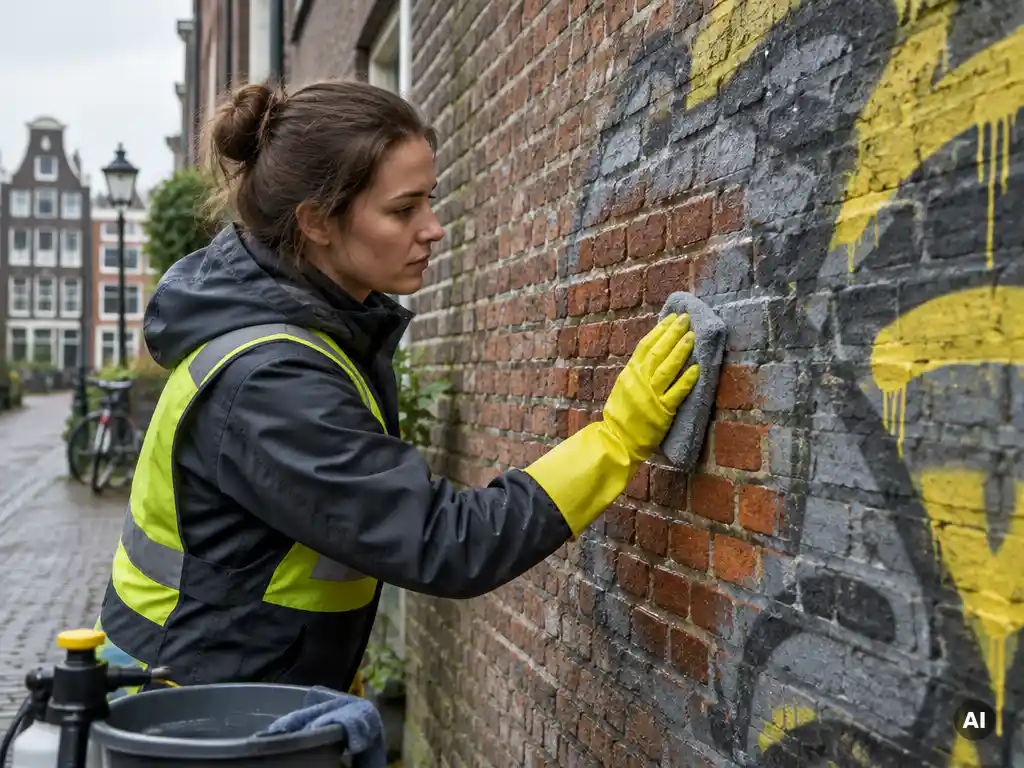
You can remove graffiti without causing damage by choosing the right cleaning agent for the type of surface and the kind of paint. The wrong product or method can damage the surface, discolor it or make it more porous. In this article, we answer the most frequently asked questions about effective and responsible graffiti removal.
Which methods are most effective for removing graffiti?
The most effective method for removing graffiti is chemical cleaning with a professional graffiti remover, optionally combined with a mechanical follow-up treatment such as rinsing with water. The choice between a liquid and a gel product depends on the surface and on how deeply the graffiti has penetrated.
On horizontal or vertical surfaces with a rough texture, such as concrete or masonry, a gel graffiti remover generally works well. The gel formulation keeps the product on the surface for longer, so it can dissolve the graffiti layer thoroughly. Liquid products are better suited to non-porous, smooth substrates such as glass, ceramic and painted metal.
High-pressure cleaning as the only method is rarely sufficient. Without chemical pretreatment, high pressure drives the ink deeper into porous materials, which makes cleaning afterwards more difficult. Chemical cleaning followed by rinsing with water is the recommended approach for most substrates.
What determines which cleaning agent is suitable for which surface?
The suitability of a graffiti remover is determined by three factors: the type of substrate, the porosity of the material and the type of graffiti or ink. Each of these factors influences how a cleaning agent reacts with the surface and how effectively it dissolves the paint.
Porous materials such as untreated concrete, brick and certain types of natural stone absorb paint more deeply. These substrates require a cleaning agent with sufficient dwell time that penetrates deeply enough to reach the graffiti layer. Non-porous materials such as glass, glazed ceramic and coated metal call for a product that works quickly and superficially without damaging the material.
The type of graffiti also plays a role. Acrylic paint, alkyd paint, permanent markers and spray paint each react differently to chemical cleaning agents. A professional graffiti remover can generally be used for a wide range of applications, but always consult the product data sheet to check whether the product is suitable for the specific combination of substrate and graffiti type.
Also pay attention to the moisture content of the substrate. A substrate that is too damp can affect how well the cleaning agent works. Specialists check this before starting the work.
How do you remove graffiti step by step without damaging the surface?
You can remove graffiti without causing damage by following a fixed sequence of steps: preparation, application of the cleaning agent, dwell time, removal and follow-up treatment. Each step contributes to the result and prevents damage to the surface.
- Assess the surface: Determine which material it is, how porous it is and how long the graffiti has been there. Fresh graffiti is generally easier to remove than dried or weathered layers.
- Choose the right product: Select a graffiti remover that is suitable for the specific substrate. Consult the product data sheet and the label for the correct application and safety instructions.
- Apply the product undiluted: Professional graffiti removers from Mavro are applied undiluted. Apply the product to the graffiti layer and make sure it is fully covered.
- Let it work: Give the product time to dissolve the graffiti layer. Keep the substrate wet if the product threatens to dry out. Consult the product data sheet for the recommended dwell time.
- Remove the graffiti: Remove the dissolved paint with a brush, scraper or high-pressure cleaner, depending on the surface. Work from the outside inwards to prevent the paint from spreading.
- Rinse afterwards: Rinse the surface thoroughly with water to remove residues of the cleaning agent and the dissolved graffiti.
- Check the result: Assess whether the graffiti has been removed completely. If necessary, repeat the procedure for stubborn residues.
On sensitive or valuable substrates, such as certain types of natural stone or historic masonry, it is wise to treat a test area first. Not every natural stone reacts to cleaning agents in the same way.
Why is an anti-graffiti coating the smartest protection after cleaning?
Applying an anti-graffiti coating after cleaning is a smart move because it protects the substrate against future graffiti and makes future removal considerably easier. Without a coating, new graffiti penetrates the surface immediately, which increases cleaning time and the risk of surface damage.
There are two main types of anti-graffiti coatings: semi-permanent and permanent systems. Semi-permanent coatings are removed along with the graffiti and have to be reapplied after every cleaning. Permanent coatings withstand multiple cleanings; the exact number varies per system. Graffitiguard Permanent is an example of an impregnating agent with permanent anti-graffiti properties.
Anti-graffiti coatings can also partly take over the function of façade impregnation. For that reason, do not recommend combining a coating with a separate impregnation as standard, but assess this case by case based on the properties of the substrate and the protection required. Consult the product data sheet for the service life of the coating; in practice this is generally a maximum of ten years, unless product-specific information states otherwise.
When is professional graffiti cleaning necessary?
Professional graffiti cleaning is necessary when the substrate is susceptible to damage, the graffiti has penetrated deeply or the affected area is large and requires expert execution. A professional approach is also advisable for graffiti on building façades or on infrastructure.
Specialists have the right products, knowledge of substrates and experience in recognizing risks such as an excessive moisture content or an unsuitable substrate. They can also handle more complex situations, such as graffiti ghosting that remains after a first cleaning, or graffiti on materials that require extra care.
For municipalities, housing associations and operators of public transport, quick and expert removal also discourages repeat offenses. Graffiti that stays visible for a long time attracts new graffiti. Professional cleaning and immediate follow-up treatment with an anti-graffiti coating together form the most effective approach to long-term management.
How Mavro helps with graffiti removal
We develop and produce professional graffiti removers for specialists who work on buildings, infrastructure and vehicles. Our products are formulated specifically for professional use and are applied undiluted to the substrate being treated. This is what we offer:
- Gel graffiti removers for porous and non-porous substrates such as concrete, masonry, metal, glass and ceramic
- Products that dissolve virtually all types of graffiti and inks, including spray paint, acrylic paint and permanent markers
- Anti-graffiti coatings for structural protection after cleaning, both semi-permanent and permanent
- Technical advice and product documentation so that specialists can choose the right product for the specific situation
Would you like to know which product is suitable for your substrate and situation? Get in touch via our contact form or call us directly on +31 (0) 418 680 680. Our specialists will be happy to help.