
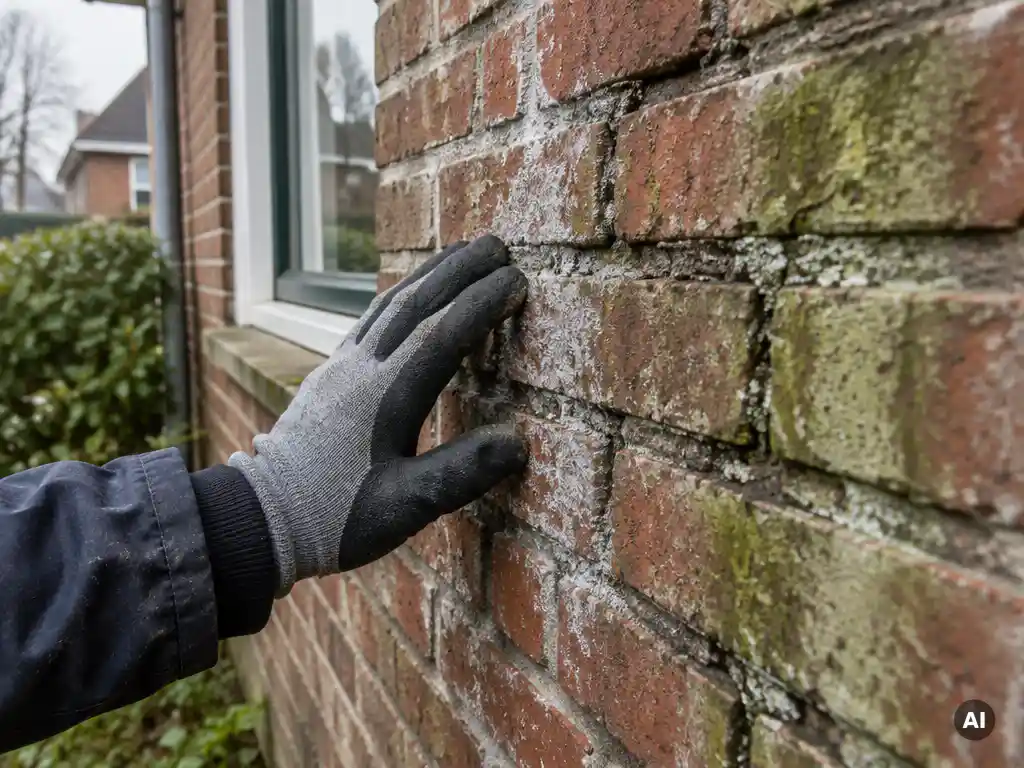
A weathered facade can be recognized by visible discoloration, damp patches, efflorescence, cracks, or flaking of the surface. These signs indicate that the material is losing its protective properties and that moisture, dirt, or biological growth is gaining a hold on the substrate. The sooner you intervene, the less invasive the treatment needs to be. In this article, we answer the most frequently asked questions about facade weathering, from the first warning signs to the right approach.
What visible signs indicate facade weathering?
Facade weathering shows itself in several recognizable ways: discoloration, green or black deposits, efflorescence, flaking, cracks, and a dull or chalky appearance. These signs show that the surface has been damaged and that the material no longer withstands moisture and weather exposure well.
The most common visible characteristics at a glance:
- Green or black deposits caused by algae, moss, or fungi, often on north-facing or shaded sides
- White efflorescence caused by salts migrating outward from within the material
- Dark damp patches that stay visible for a long time after rain
- Flaking or detachment of the top layer on painted or coated facades
- Hairline cracks or larger fissures in the pointing or the facade surface itself
- Dull or greyed surface that has lost its original color
Each of these signs has a different cause, but they all point to the same thing: the facade has become vulnerable and needs treatment. Professional facade cleaning is in many cases the first step to restore the surface and stop further deterioration.
What causes weathering in facades?
Facade weathering results from a combination of weather exposure, biological load, and the properties of the material itself. Moisture is the main driver: water that penetrates the material, freezes, expands, and thus damages the structure from within. This process accelerates when a facade has little or no protection.
The main causes of weathering are:
- Moisture and frost action: water penetrates pores, freezes at low temperatures, and breaks down the material from within
- UV radiation: sunlight attacks binders and pigments, causing colors to fade and coatings to break down
- Biological growth: algae, moss, and fungi retain moisture and produce acids that attack the surface
- Air pollution and acid rain: particulate matter, soot, and sulfur compounds settle on the surface and accelerate chemical degradation
- Mechanical stress: wind, dust, and temperature fluctuations cause expansion and shrinkage, leading to cracks
All of these factors interact. A facade that already has biological deposits absorbs more moisture, which increases frost damage and accelerates chemical attack.
We’ll figure it out for you!
Want to talk through your challenge?
Our advisors will be happy to help you find a practical solution.
How quickly does an untreated facade weather?
An untreated facade starts to show visible weathering within a few years, depending on the material, the location, and the local weather conditions. In exposed locations, such as facades that catch a lot of rain and wind or receive little sunlight, biological deposits can become visible after just two to three years.
The rate of weathering depends heavily on a number of factors:
- Orientation of the facade: north- and west-facing facades are wetter and shadier more often, which promotes biological growth
- Material type: porous materials such as brick, concrete, and natural stone absorb moisture faster than non-porous cladding
- Urban or industrial environment: higher concentrations of air pollution accelerate surface deterioration
- Presence of an existing coating or impregnation: a degraded protective layer no longer offers any resistance
Without treatment, problems pile up: what starts as an aesthetic issue becomes a structural risk. Intervening in time limits both the damage and the cost of repair.
When is facade weathering serious enough to require professional treatment?
Professional treatment is needed as soon as the facade shows visible damage that goes beyond superficial dirt, or when moisture is demonstrably penetrating the material. If you wait too long, damage to the pointing, insulation, or load-bearing structure can occur, requiring considerably more repair work.
Call in specialists in the following situations:
- Stubborn biological deposits that do not disappear with regular cleaning
- Recurring damp patches after rainfall, even in places that normally dry quickly
- Visible cracks, loosening of joints, or flaking of the surface
- Efflorescence indicating moisture penetration from within
- A facade that has gone without maintenance for several years and is visibly aged
At this stage, cleaning alone is no longer sufficient. After cleaning, a protective treatment, such as facade impregnation, is needed to stabilize the material and prevent recurrence.
Which facade materials are most susceptible to weathering?
Porous materials are the most susceptible to weathering because they readily absorb and retain moisture. Concrete, brick, calcium silicate brick, and certain types of natural stone are among the most vulnerable facade materials. Non-porous cladding, such as certain composite or plastic panels, is generally more resistant, but can still fade and become more brittle due to UV radiation and temperature fluctuations.
Porous mineral materials
Concrete and brick are widely used facade materials that naturally absorb moisture. Without protection, they can quickly develop biological growth and are prone to frost damage. Calcium silicate brick has an open structure that absorbs water quickly, which encourages efflorescence and salt damage. Natural stone varies greatly by type: sandstone is porous and vulnerable, while granite is denser but not immune to surface deterioration either.
Painted and coated facades
Facades with an existing paint layer or coating age differently. The protective layer itself is attacked by UV radiation and moisture, causing it to blister, flake, or peel. Once the coating loses its integrity, the underlying material is directly exposed to the elements. With non-porous cladding, such as plastic window frames and facade panels, aging often leads to color loss and a dull appearance.
What is the difference between facade cleaning and facade treatment?
Facade cleaning removes dirt, deposits, and biological growth from the surface. Facade treatment then protects the material against new deterioration. The two steps are separate but work best in combination: cleaning without follow-up treatment leaves a vulnerable surface, while treatment on a dirty facade bonds less effectively.
The distinction is as follows:
- Facade cleaning focuses on removing existing contaminants: algae, moss, soot, lime, efflorescence, and general dirt. The result is a clean surface, but without added protection
- Facade impregnation penetrates the pores of the material and makes it water-repellent without blocking its vapor-permeable properties. This slows new biological growth and reduces moisture absorption
- Facade coating applies a protective layer to the surface, suitable for non-porous materials or facades that need color restoration
Technically, facade impregnation involves a combination of alkylsilanes and (poly)siloxanes that penetrate the substrate. The lifespan of an impregnation is generally a maximum of ten years, depending on the material and exposure. For non-porous facades, coatings are the appropriate solution, combining color restoration and surface protection.
How Mavro helps with weathered facades
We offer a targeted range for the renovation and protection of facades, tailored to both porous and non-porous substrates. Whether it involves restoring an aged coating, making a brick facade water-repellent, or protecting plastic cladding, we supply products that specialists can apply right away.
What we offer for weathered facades:
- Semi-permanent coatings such as Nitowax, Nitoshield, and Nitocryl® for the restoration and protection of non-porous cladding and window frames
- Permanent color-restoring coating Nitocolour, with a lifespan of generally up to ten years, for facades that have visibly aged
- Products that repel moisture, oils, and solvents and protect the facade against renewed dirt and biological deposits
- Advice and technical support for choosing the right product for each substrate and situation
Want to know which approach suits your specific facade? Get in touch or call our specialists directly on +31 (0) 418 680 680.