
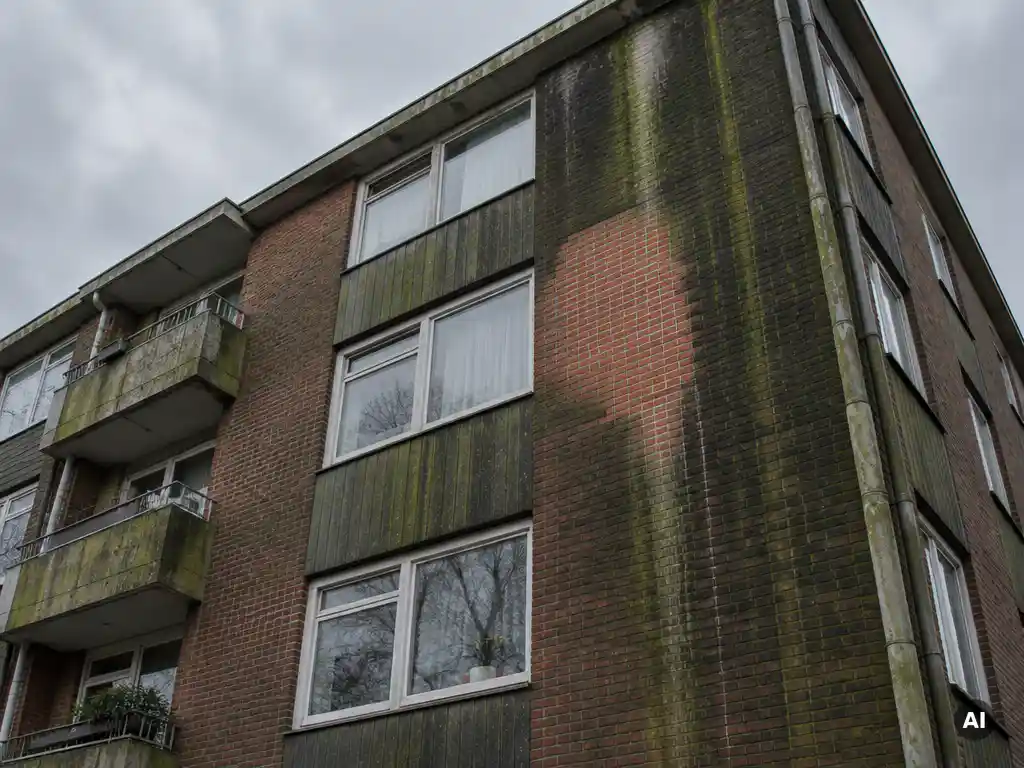
Pollution significantly shortens the lifespan of facade cladding. Dirt, algae, soot and biological growth penetrate the material, attack its structure and accelerate weathering. For professional property managers and contractors, this is a direct maintenance issue that calls for targeted action. The following questions explain exactly how this process works and what you can do about it.
Which types of pollution damage facade cladding the most?
The most harmful types of pollution for facade cladding are biological growth (algae, moss, fungi), soot and particulate matter deposits, limescale deposits and graffiti. These types of pollution are not only visually unsightly, but also chemically and physically destructive to the material itself.
Biological growth is particularly aggressive: algae and moss retain moisture against the facade surface, resulting in constant moisture load. Soot and particulate matter, originating from traffic and industry, adhere to porous surfaces and are nearly impossible to remove without professional treatment. Graffiti forms a separate category: paint penetrates deep into the material when no protective coating is present, making removal invasive and costly.
How does pollution penetrate facade materials?
Pollution penetrates facade materials through the open pore structure that most building and facade materials naturally have. Concrete, stone, brick and plasterwork are porous: water, dirt and chemicals are actively absorbed, especially when no protective layer is present.
When it rains, dissolved contaminants are washed into the pores. Temperature fluctuations then cause expansion and contraction, so that trapped moisture and dirt put pressure on the pore walls. Biological organisms secrete acids and enzymes that chemically attack the binder in concrete or joint mortar. In this way, pollution works not only at the surface, but deep within the material itself.
With professional facade cleaning, it is therefore important not only to remove the visible dirt, but also to assess the underlying cause of the contamination patterns.
What are the visible and invisible consequences of long-term pollution?
Long-term pollution visibly leads to discoloration, stains, green deposits and surface damage. Invisibly, deeper processes take place: moisture accumulation in the core of the material, degradation of the binder structure and loss of cohesion in the outer layer of the material.
Visible consequences include:
- Green or black discoloration caused by algae and fungi
- Soot streaks and grey deposits on light-colored facades
- Efflorescence and salt stains on concrete and brick
- Graffiti residue that remains visible in the material after removal
The invisible damage is often more serious: an increased moisture content in the facade section leads to frost damage in winter, where frozen water causes the material to flake off from the inside. Fungi compromise structural integrity, and chemical reactions between pollution and the binder can eventually lead to cracking.
How exactly does pollution shorten the lifespan of facade cladding?
Pollution shortens the lifespan of facade cladding by accelerating material degradation. Without protection or timely cleaning, a facade that would normally last decades can show structural damage within a few years that requires expensive repair work.
The mechanisms are direct and demonstrable. An increased moisture content due to biological growth intensifies frost damage. Chemical attack by secreted organic acids damages the surface structure. Graffiti that is not removed in a timely and correct manner eats deeper into the material as time passes. Taken together, all these processes mean that maintenance intervals become shorter, renovation costs rise and the functional lifespan of the facade cladding decreases. For property managers and contractors, this is a direct cost item that remains manageable with preventive maintenance.
When is professional facade cleaning necessary?
Professional facade cleaning is necessary as soon as biological growth, stubborn stains or surface damage become visible that cannot be remedied with regular maintenance. Professional cleaning is also a required step when preparing for a new coating or impregnation.
Specific situations in which you should call in professional cleaning:
- Visible algae, moss or fungi on the facade surface
- Stubborn soot or limescale deposits that cannot be removed with water
- Graffiti that has been on the facade for more than a few hours
- Preparation for facade impregnation or the application of a protective coating
- Facades that have gone without maintenance for years and are visibly weathered
Specialists assess the type of pollution, the material and the condition of the substrate before choosing a cleaning method. Incorrect cleaning, with too much pressure or unsuitable agents, can cause more damage than the pollution itself. Always consult the product data sheet and label for correct application.
How does an anti-graffiti or protective facade coating protect against pollution?
An anti-graffiti coating or protective facade coating creates a barrier on the facade surface that prevents dirt, moisture and graffiti from penetrating the material. This extends the lifespan of the facade cladding and reduces the cleaning frequency.
With facade impregnation, the material is treated with components based on alkylsilanes and (poly)siloxanes. These penetrate the pore structure and make the surface water-repellent without blocking vapor permeability. Moisture can then no longer penetrate deep into the material, which counteracts biological growth and frost damage.
Anti-graffiti coatings work differently: they form a sealing layer to which graffiti and dirt do not adhere and from which they are easier to remove. There are semi-permanent systems, where the coating is removed along with the graffiti and must be reapplied, and permanent systems that withstand multiple cleaning cycles. The lifespan of a protective coating is generally up to ten years, depending on the specific system and conditions.
Anti-graffiti coatings can take over the function of facade impregnation. A combination of both is therefore not required as standard; specialists assess per situation which system is most suitable. You can find more information about the available graffiti removers on our product page.
How we help with facade cleaning and protection
We develop and manufacture professional products for the cleaning, impregnation and protection of facades. Our range is aimed at specialists working on both residential and commercial property. What we offer:
- Semi-permanent coatings such as Nitowax and Nitoshield, which restore weathered facades and protect them against moisture, oil and graffiti
- Permanent color-restoring coating Nitocolour, with a lifespan of generally up to ten years
- Nitocryl® for the renovation and protection of non-porous facade cladding and window frames
- Technical advice and training for correct application by specialists
Want to know which system is suitable for your facade and situation? Get in touch or call us directly on +31 (0) 418 680 680. We are happy to think along with you.