


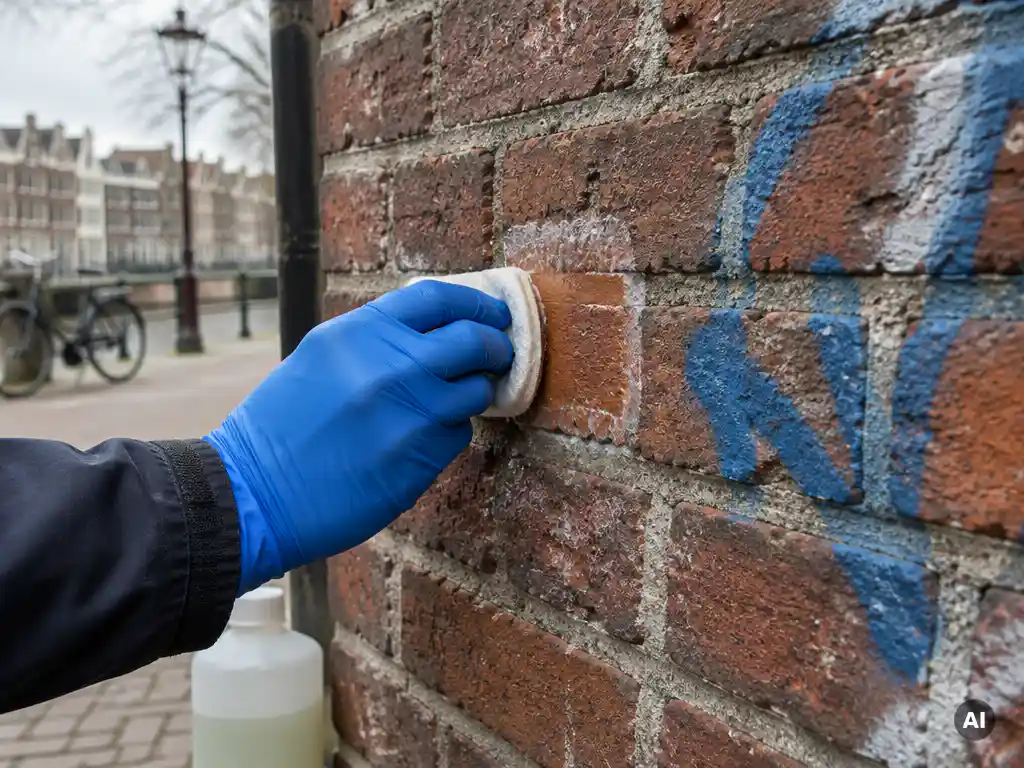
A graffiti remover is safe for a surface if you first test the product on an inconspicuous spot and check that it is suitable for the specific material. Not every cleaning agent works on every surface: a product that is suitable for concrete can cause damage on natural stone or painted facades. The sections below answer the most frequently asked questions about safe testing and responsible use.
What damage can a graffiti remover cause to a surface?
A graffiti remover can damage surfaces through discoloration, dissolving of coatings, or attacking the top layer of the material. This happens when the chemical composition of the product does not match the properties of the surface. Porous materials such as natural stone and untreated concrete are particularly sensitive to aggressive solvents.
Specific types of damage that can occur include:
- Discoloration or stains because the solvent attacks the pigments in the material
- Surface erosion when the product is left to act for too long or a product that is too strong is used
- Flaking of paint or coating if the product attacks the underlying finishing layer
- Attack on metal, which can cause corrosion to occur faster
- White haze or efflorescence on stone or concrete after a reaction with minerals in the material
The risk of damage is greater on unfamiliar surfaces, with products that lack clear instructions for the material in question, and when the dwell time is too long. Always testing first is therefore not an unnecessary precaution, but a necessary step. For every application, consult the product data sheet and the label.
How do you carry out a spot test for graffiti removal?
You carry out a spot test for graffiti removal by applying a small amount of the product to an inconspicuous spot on the surface, observing the dwell time, and then checking for discoloration, changes in texture, or other abnormalities. This way you can be sure the product is suitable for the material in question before you apply it to the visibly affected area.
Follow these steps for a reliable spot test:
- Choose an invisible test spot, for example a corner, a back side, or a concealed area of the surface.
- Apply a small amount of graffiti remover with a cloth or brush, exactly as the product instructions describe.
- Observe the recommended dwell time from the product specifications, no longer and no shorter.
- Remove the product in the prescribed manner, for example with water or a dry cloth.
- Assess the result after drying: check for color differences, changes in gloss, surface damage, or other abnormalities.
- Wait 24 hours if necessary before making a final assessment, because some reactions only become visible after drying.
Only if the test spot remains unchanged is it responsible to use the product on the entire area affected by graffiti. If in doubt, consult the supplier or a specialist.
We’ll figure it out for you!
Want to talk through your challenge?
Our advisors will gladly help you with a practical solution.
What do the safety data sheet and the product specifications say?
The safety data sheet (SDS) and the product specifications indicate which surfaces a graffiti remover is suitable for, which materials you should avoid, how to apply the product, and what to do in the event of unwanted reactions. These are the two most important documents you should always consult before using a cleaning product.
In the safety data sheet you will find, among other things:
- The chemical composition and the concentration of active substances
- Warnings about incompatible materials or surfaces
- Personal protective equipment that is mandatory during use
- First aid measures in case of skin contact or inhalation
- Environmental and disposal guidelines
The product specifications add practical usage information to this: recommended dwell times, suitable surfaces, and application methods. Together, these documents give you a complete picture of what the product can do and where its limits lie. Professional graffiti removers are always supplied with both documents. If either one is missing, that is a signal not to use the product.
Which surfaces require extra caution during graffiti removal?
Surfaces that require extra caution during graffiti removal include natural stone, granite, historic masonry, painted facades, wood, and glass with special coatings. These materials can be sensitive to aggressive solvents and may discolor, turn dull, or suffer structural damage when an unsuitable product is used. Always consult the product data sheet to assess whether a product is suitable for the specific surface.
Different risks apply to each type of material:
- Natural stone and granite: sensitivity to acids and alkaline products differs per type of stone; always test on an inconspicuous spot before applying the product more widely
- Historic masonry and brick: porous and fragile; solvents penetrate deeply and are difficult to remove completely
- Painted facades: the paint layer can come loose or discolor when solvent-rich cleaning agents are used
- Wood: absorbs liquids quickly, so the product penetrates deeper than intended
- Coated glass: special coatings such as anti-reflective or solar control layers can be damaged by chemical action
Public transport equipment such as trains, buses, and trams is also subject to specific requirements, because the surfaces often consist of lacquered metal sheets or plastic panels. You can find more information on a suitable approach on the page about graffiti removal on public transport.
When is it time to call in a specialist for graffiti removal?
It is time to call in a specialist for graffiti removal when the surface is sensitive or valuable, when the graffiti has penetrated deep into the material, or when previous removal attempts have left a graffiti ghost. Also for large surfaces, historic buildings, or cases where standard products deliver no results, professional execution by specialists is the sensible choice.
Specific situations in which you call in a specialist:
- The graffiti is on a protected monument or historic building
- Previous attempts have caused damage or discoloration
- A stubborn graffiti ghost has remained after cleaning
- The surface consists of an unknown or composite material
- The extent of the graffiti exceeds what you can handle with standard products and equipment
- The building or object has an active anti-graffiti coating that requires specific knowledge for removal
A specialist has the right knowledge of materials, access to professional products, and the experience to prevent damage. If in doubt, calling in help early is always cheaper than repairing damage afterwards. This applies in particular to buildings: also see the specific considerations for removing graffiti from buildings.
How we help you with safe graffiti removal
Mavro develops and produces professional graffiti removers that are formulated for use on a wide range of surfaces. The products are applied undiluted. Consult the product data sheet and the label for the correct application method, dwell times, and safety instructions that apply to the specific product.
What our solutions concretely offer:
- Suitable for a variety of surfaces such as concrete, masonry, metal, glass, and ceramics; consult the product data sheet for the specific suitability per substrate
- Gel formats that stay on the surface longer for targeted action without running off
- Complete documentation: every product is supplied with a safety data sheet and product specifications
- Advice and training for correct application by specialists, so the product is always used in the right way
Would you like to know which product is suitable for your specific surface or situation? Contact us and we will help you further with concrete advice.